Our project explores one of the biggest questions in modern science: how large groups of quantum particles behave when they interact. These behaviours underpin materials, chemistry and even fundamental processes in the universe, yet they remain extremely challenging to study using conventional computational methods.
To address this, we are developing new quantum systems based on ultracold polar molecules, cooled to a fraction of a degree above absolute zero. These systems allow us to control interactions and dynamics with remarkable precision, opening the door to discovering entirely new forms of quantum matter. Using advanced techniques such as optical tweezers, optical lattices and molecular Bose–Einstein condensates, we investigate quantum magnetism, strongly interacting fluids, exotic phases and other many‑body effects. This work brings together expertise in physics and precision measurement to uncover how complex quantum behaviour emerges and to lay the groundwork for future quantum technologies, including ultra‑sensitive sensors.
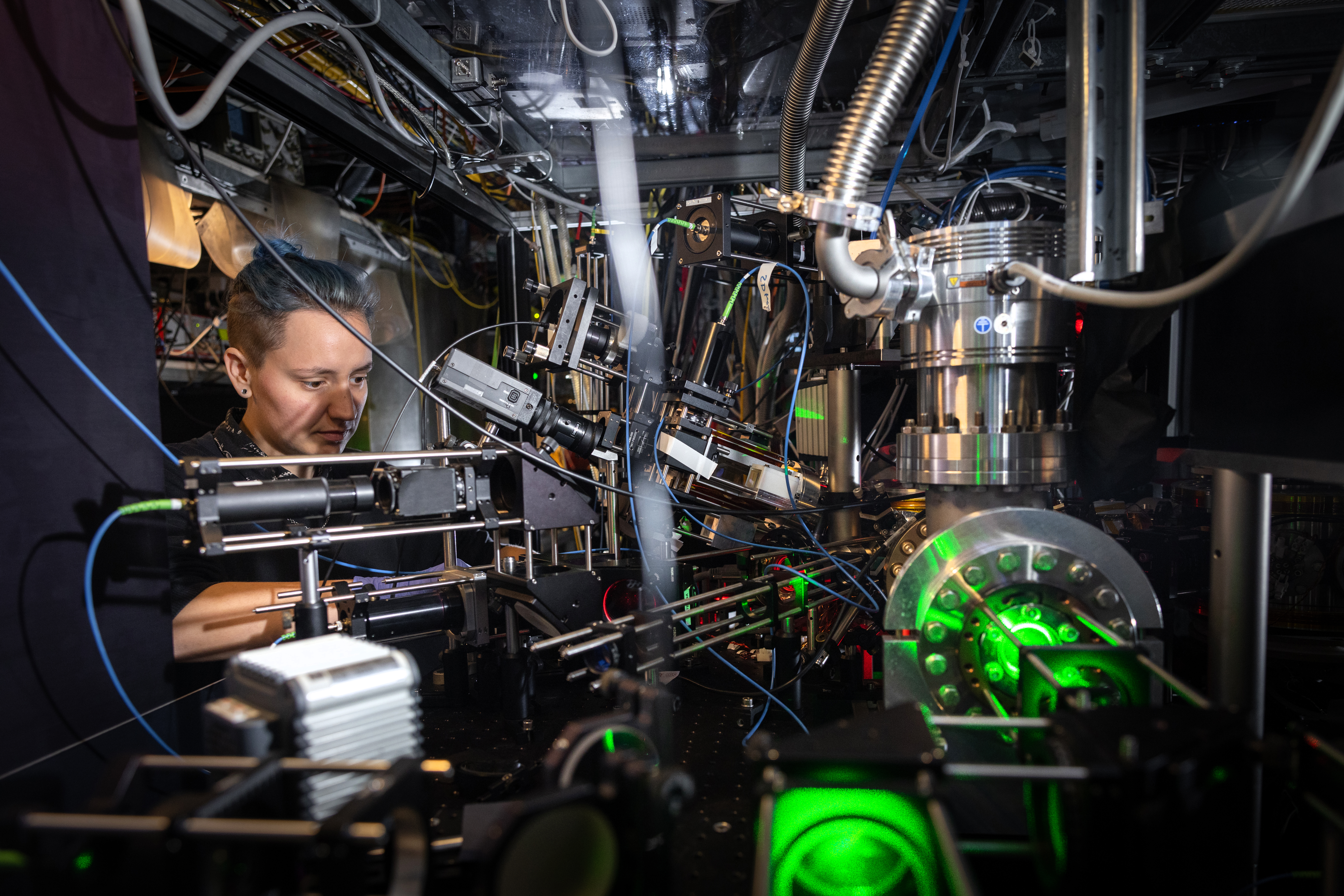
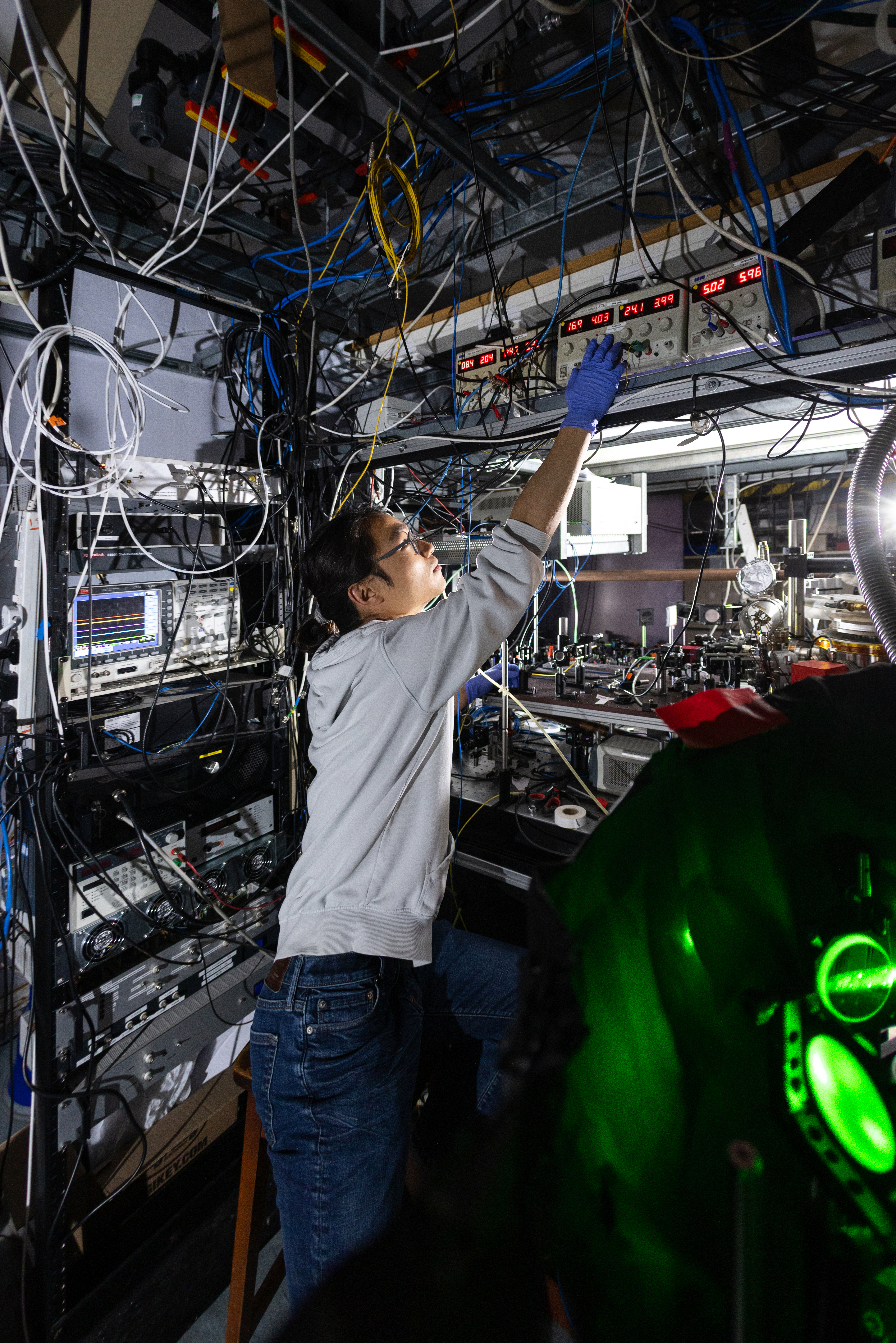
The images shown here capture typical experimental work at the Centre for Cold Matter, where researchers operate sophisticated laser, optical and ultra‑high‑vacuum systems to cool and trap molecules such as calcium monofluoride (CaF) and aluminium monofluoride (AlF). Laser beams, precision optics, electronics and vacuum apparatus are used to prepare molecular samples at ultralow temperatures and to control their quantum states with exceptional accuracy.
Within the QSMol programme, these experiments form a crucial step in establishing ultracold molecules as a powerful platform for quantum science, enabling controlled studies of collisions, dipolar interactions and many‑body quantum behaviour beyond the reach of conventional atomic systems.